The scoop on complications from Dysport or Botox
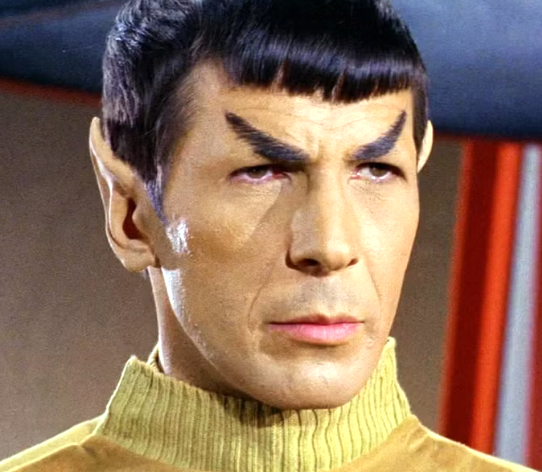
Mr. Spock had a crazy brow lift before Botox Cosmetic ever hit the market!
Lately, a certain funny podcaster has been all over the internet sharing her complication from masseter tox - she can’t smile. Many of our people are asking us about what happened to her, but even before this mis-hap, an influencer was all over the internet and the Today Show sharing her eyelid drop from Botox, and back then we were cringe-fully discussing that complication with our curious patients. Bottom line: yes, complications happen rarely from Botox or Dysport treatments (we like to call them both Tox). Well-educated and experienced injectors know the facial anatomy, which structures are adjacent to which, and the best practices to avoid complications as much as possible. Complications from tox are very very rare, and always temporary. Even Ms. Funny Podcaster will surely return to normal after 3-4 months.
Informed consent is very important when partaking of any medical procedure including tox treatments. Consents are always these long-winded documents, so we at Skinbeam like to discuss verbally with our patients what specific complication risks apply to their individual treatment choices. It’s a little icky, but we have to talk about it, you should always be informed.
Let’s dive into which Tox treatment areas carry risk for which (rare! temporary!) complications:
The 11’s: glabellar complex, or in between the eyebrows:
Probably the most feared by injectors, this treatment area carries risk for eyelid ptosis (eyelid drop). The muscle that mainly lifts your eyelid lies roughly above the pupil, under the eyebrow. It’s precious territory. Injection depth and location really matter here, which is why a well trained and experienced injector is important. This complication is rare, and it’s made even more rare by good injection technique, but if you’re going to have your 11’s treated, the risk is never zero. Again though, eyelid ptosis would be temporary, it would not last longer than the duration of Tox itself (3 months), and we have medications to help treat it in the meantime.
Masseters: your chewing, grinding & clenching muscles:
Masseter tox is great for reducing how much force your muscles can place on your teeth and temporomandibular joints (TMJ). Masseter tox pairs well with a night guard and helps reduce symptoms from teeth grinding/clenching. A couple issues can arise from treating this area with tox.
Paradoxical outward movement of the outer layer of the masseter muscle when biting down, creating a transient bump at the jaw is a problem injectors sometimes call “walnuts.” This usually only occurs for a day or two during the first 14 days post-treatment as the medication is setting up. It has to do with the tox beginning to work in one part of the muscle before it starts to work in another part, and it’s almost always self-resolving by day 14. If not, it’s an easy touch-up.
Smile drop. Sigh, this is what Ms. Funny Podcaster is dealing with on both sides of her face. It’s also possible to have a one-sided smile drop. The muscles that pull the corners of your mouth up into a smile lie over the upper masseters, and it’s possible to accidentally inject them, or for the tox to migrate into the smile muscles. Everyone’s facial anatomy is different, and each individual’s smile muscles may overlie the upper masseters to varying degrees, which injectors can’t see without ultrasound. Again, this complication would not last longer than the overall duration of tox (3 months), and anatomical knowledge & good injection technique helps minimize risk, but the risk is never zero.
Depressor Anguli Oris (DAO): the muscles that allow you to frown:
We inject these as a tactic to help prevent marionette lines and/or to literally stave off RBF. The idea is to relax the muscles that make you frown (the DAOs) so that the resting tone of the smile muscles can dominate, resulting in the corners of the mouth being neutral to upturned when the face is resting. The effect is subtle, but it’s a thing.
It’s possible to accidentally inject, or for the Tox to migrate into the neighboring muscles: depressor labii inferioris (DLI). The DLI muscles pull downward on the middle of the lower lip when you’re smiling. When the DLI is affected by Tox the lower half of the smile can appear too high or asymmetrical.
Forehead Tox vs eyebrow height:
We spend time during practically every Tox treatment discussing this. Raise your hand if you’ve already heard it! Ha. Placement of Tox injection points too low on the forehead can make the eyebrows low, and potentially the eyelids heavy as well, depending on how heavy the eyelids were naturally - this really varies from person to person. In general, people who are good candidates for blepharoplasty (eyelid lift surgery) aren’t good candidates for forehead Tox treatment, and careful assessment by the injector is required.
Eyebrow asymmetry is a potential result from forehead Tox injections, but fortunately easy to touch up.
“Spock” eyebrows can potentially result from placement of forehead injections in a V pattern, although not everyone is prone to getting spock brows. This is a tell-tale old-school Botox look where the lateral tails of the eyebrows are too high compared to the middle brows. This is a great brow lift, in a way, but most people don’t want it. Fortunately it’s also a very easy touch up.
After writing all this (without AI!!!!!) I’m proud to say our complication rate is very low at Skinbeam, mainly due to good training, experience and unhurried treatment time slots (40 minutes with your injector compared to the standard 20-30). Stay away from Groupon injectors, and extremely cheap Tox - they’re almost definitely not real, and always make sure to follow your after care instructions. The main purpose of Tox after care advice is to prevent the above tox migrations. Now you know!